Here’s something most dentists won’t spend more than two minutes explaining to you: your mouth hosts over 700 species of bacteria at any given moment. Most of them aren’t your enemies. But when the balance tips — and it does, often without warning — the ones that cause damage start winning.
Bleeding gums after brushing. Teeth that suddenly feel sensitive to cold. Persistent bad breath even after cleaning. These aren’t random inconveniences. They’re signals from a microbial war happening in your mouth every single day. And the way most people respond to those signals — more brushing, stronger mouthwash, another trip to the dentist — often misses the root of the problem entirely.
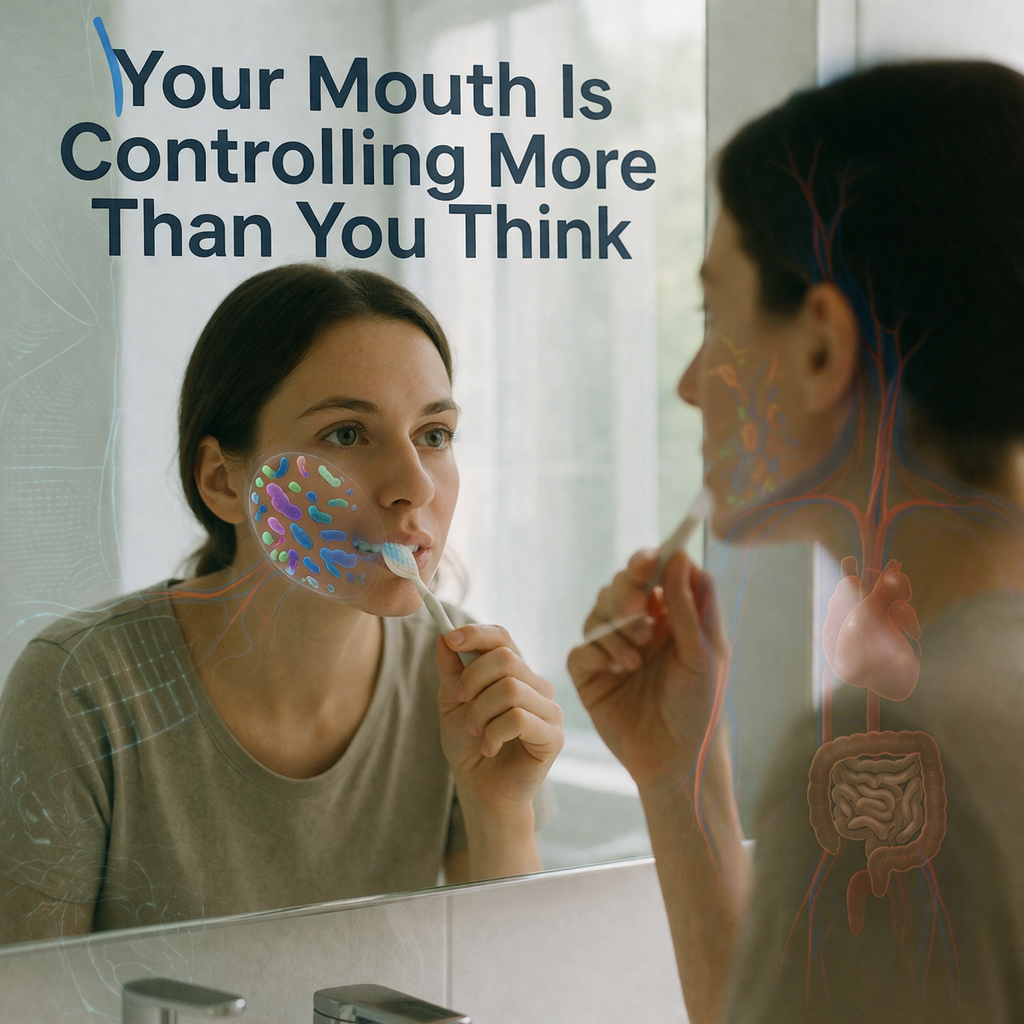
This is a deep look at what’s really going on with your oral health, why surface-level fixes keep falling short, and what science is now telling us about supporting your mouth from the inside out.
What the Oral Microbiome Actually Is (And Why You Should Care)
“Microbiome” has become one of those words that gets tossed around a lot in health content, usually in relation to the gut. But your mouth has its own distinct microbial community — one that’s just as complex, and in some ways, more immediately impactful on your day-to-day wellbeing.
Your oral microbiome is the collection of bacteria, fungi, viruses, and other microorganisms that live on your teeth, gums, tongue, and throughout your saliva. A healthy oral microbiome has a diverse range of beneficial species that keep harmful ones in check. They help regulate your oral pH, contribute to saliva production, support gum tissue integrity, and form a protective barrier against pathogens.
The problem starts when this balance breaks down — a state called dysbiosis. When harmful bacteria like Streptococcus mutans, Porphyromonas gingivalis, and Treponema denticola gain dominance, you start seeing the consequences: tooth decay, gum inflammation, enamel erosion, and persistent bad breath.
What drives dysbiosis? A lot of things you probably already suspect — sugar, processed foods, alcohol, tobacco — but also things that fly under the radar. Chronic stress triggers cortisol spikes that suppress immune responses in gum tissue. Certain medications reduce saliva flow, which is one of your mouth’s most important natural defenses. Even sleeping with your mouth open dries out the oral environment and lets harmful bacteria multiply faster.
Why Surface Cleaning Only Goes So Far
Brushing twice a day and flossing are important — nobody’s saying skip them. But here’s the reality: brushing removes surface plaque. It doesn’t fix the conditions that made the plaque thrive in the first place. If your oral pH is acidic, if your saliva production is low, if the balance of microbial species has shifted — brushing twice a day is like mopping while the tap is still running.
This is why so many people do everything “right” by conventional dental advice standards and still end up with recurring gum issues or cavities. They’re managing symptoms, not addressing cause.
The emerging science on oral health is pointing in a different direction: systemic support. Supporting the oral environment from within — through nutrition, targeted compounds, and restoring microbial balance — produces more durable results than surface intervention alone.
Enamel Erosion: The One-Way Door
Of all the issues that come with poor oral microbiome balance, enamel erosion is the one that worries me most to talk about, because it’s irreversible. Unlike bone, enamel doesn’t regenerate. Once it’s gone, it’s gone.
Enamel — the hard outer shell of your tooth — is composed primarily of hydroxyapatite, a crystalline calcium phosphate mineral. It’s the hardest substance in your body. But it’s also surprisingly vulnerable to acid.
When harmful bacteria in your mouth metabolize sugars and starches, they produce acidic byproducts. These acids lower your oral pH, and when pH drops below 5.5, the demineralization process begins — minerals leach out of enamel faster than they’re replaced. Do this consistently over months and years, and you get visibly thinner enamel, increased sensitivity, and a higher risk of cavities.
The Remineralization Window
There’s a brief window after each acid attack — typically 20 to 40 minutes — where saliva can help remineralize enamel by depositing calcium and phosphate back into the surface. This is called the remineralization process, and it’s your mouth’s natural repair mechanism.
The problem is that most modern eating patterns work against it. Frequent snacking means your mouth never fully recovers from one acid exposure before the next one begins. Sugary drinks (including fruit juice) are particularly damaging because they maintain low oral pH for extended periods.
Supporting remineralization means two things: reducing the frequency and intensity of acid exposure, and ensuring your body has the raw materials — calcium, phosphate, key vitamins — to rebuild enamel during those recovery windows.
Gum Disease: The Silent Escalation Nobody Sees Coming
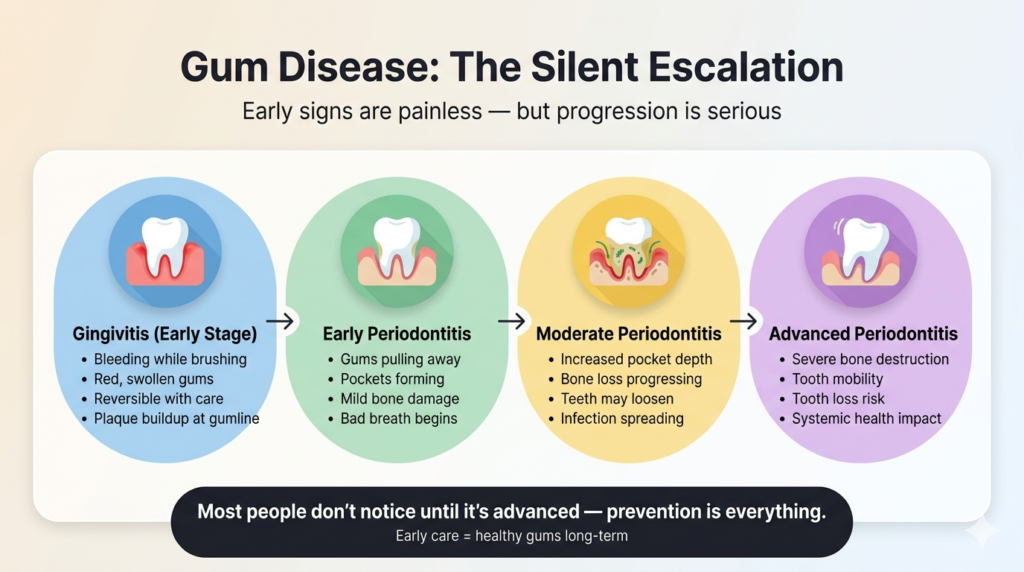
Gum disease is absurdly common. The Centers for Disease Control estimates that nearly half of adults over 30 in the United States have some form of periodontal disease. About 9% have severe gum disease. And a significant percentage of people with it don’t know — because the early stages often don’t hurt.
It progresses in predictable stages:
Gingivitis is the starting point — inflammation of the gum tissue, driven mostly by bacterial plaque along the gumline. At this stage, the damage is still reversible. Gums bleed when you brush. They may look red or swollen. Most people shrug it off.
Periodontitis is where things get serious. The infection spreads below the gumline, destroying the connective tissue and bone that hold teeth in place. Pockets form between the gum and tooth, creating spaces where bacteria thrive even further from cleaning. At this point, the damage is not fully reversible — it can be managed, but not undone.
Advanced periodontitis leads to tooth mobility and eventual tooth loss. The bacteria involved also don’t stay local. Research has linked oral pathogens to cardiovascular disease, type 2 diabetes, respiratory conditions, and adverse pregnancy outcomes.
This isn’t fear-mongering. It’s established biology. The mouth is connected to the rest of your body through blood vessels, the lymphatic system, and the airways. A severely imbalanced oral microbiome is not just a dental problem — it’s a systemic one.
What Science Says About Natural Compounds and Oral Health
The most interesting developments in oral health research over the past decade aren’t coming from toothpaste reformulations. They’re coming from studies on natural compounds and their effects on oral bacterial populations, gum tissue integrity, and enamel support.
Here are some of the ingredients researchers have zeroed in on:
Xylitol — The Sugar That Fights Bacteria
This is one of the most well-documented natural compounds in dental science. Xylitol is a sugar alcohol naturally found in birch trees and certain fruits. What makes it useful for oral health is structural: harmful oral bacteria, particularly S. mutans, absorb xylitol like they would regular sugar, but can’t metabolize it. The result is a futile cycle that kills bacterial cells and reduces their ability to produce acid.
Studies have consistently shown that regular xylitol use reduces the concentration of cariogenic bacteria in saliva, lowers the frequency of new cavities, and may even promote enamel remineralization by keeping oral pH more neutral.
Grape Seed Extract — Antioxidant Protection for Gum Tissue
Grape seed extract is rich in proanthocyanidins, a class of polyphenols with significant antioxidant and anti-inflammatory properties. For gum health specifically, research has shown it can inhibit collagenase enzymes — the enzymes that harmful periodontal bacteria use to break down the collagen in your gum tissue.
There’s also evidence that grape seed extract can interact with dentin proteins to strengthen the collagen structure, potentially slowing down the progression of decay at the dentin level — the softer layer beneath enamel.
Cranberry Extract — Blocking Bacterial Adhesion
One of the most fascinating mechanisms in oral health research is bacterial adhesion — the ability of harmful bacteria to stick to tooth surfaces and form biofilms (plaque). Cranberry polyphenols, particularly a group called proanthocyanidins, have been shown to interfere with this adhesion process.
When bacteria can’t stick effectively, they can’t form the stable colonies that lead to sustained acid production and gum destruction. Cranberry extract essentially makes it harder for harmful organisms to set up camp in your mouth.
Peppermint — More Than Just Fresh Breath
Peppermint’s antibacterial properties are real, not just a marketing angle. The active component, menthol, has demonstrated activity against several oral bacteria. But peppermint also supports healthy saliva production — and since saliva is your mouth’s first line of mechanical defense, anything that promotes salivation is genuinely useful.
Peppermint also has mild anti-inflammatory properties that can soothe irritated gum tissue, and it helps neutralize volatile sulfur compounds, which are the primary culprits behind chronic bad breath.
Carrot Powder — Vitamin A for Gum Membrane Health
Vitamin A is essential for the health and repair of epithelial tissues — including the mucous membranes lining your gums and mouth. Deficiency in vitamin A is associated with gum degradation and slower wound healing in oral tissue. Carrot powder provides a bioavailable source of beta-carotene, which the body converts to vitamin A as needed, along with vitamin C (critical for collagen synthesis in gum tissue) and antioxidants that support overall oral cellular health.
Stevia — Antibacterial Without Feeding Bacteria
Like xylitol, stevia doesn’t ferment in the presence of oral bacteria, so it won’t contribute to acid production. But beyond being a safe sweetener, stevia has shown mild antibacterial properties against several strains of oral pathogens. It also has naturally soothing properties that may help calm gum irritation — a useful bonus for anyone dealing with inflamed gum tissue.
Why “Inside Out” Support Makes More Biological Sense
Most dental products — toothpaste, mouthwash, whitening strips — work on the outside of your teeth. They’re contact-dependent: the active ingredient has to physically touch the surface to do anything, and that contact lasts maybe two minutes twice a day.
Supplementing from within is fundamentally different. When you deliver bioactive compounds systemically — through digestion and into the bloodstream — they reach the tissues that feed your gums, the saliva glands that produce your protective saliva, and the cellular environment of your oral microbiome continuously, not just during brushing.
The 60-day money-back guarantee behind it also matters to me when evaluating any supplement — it signals confidence that the product actually does what it claims, because refund rates would otherwise make such a guarantee unsustainable.
Five Daily Habits That Actually Move the Needle
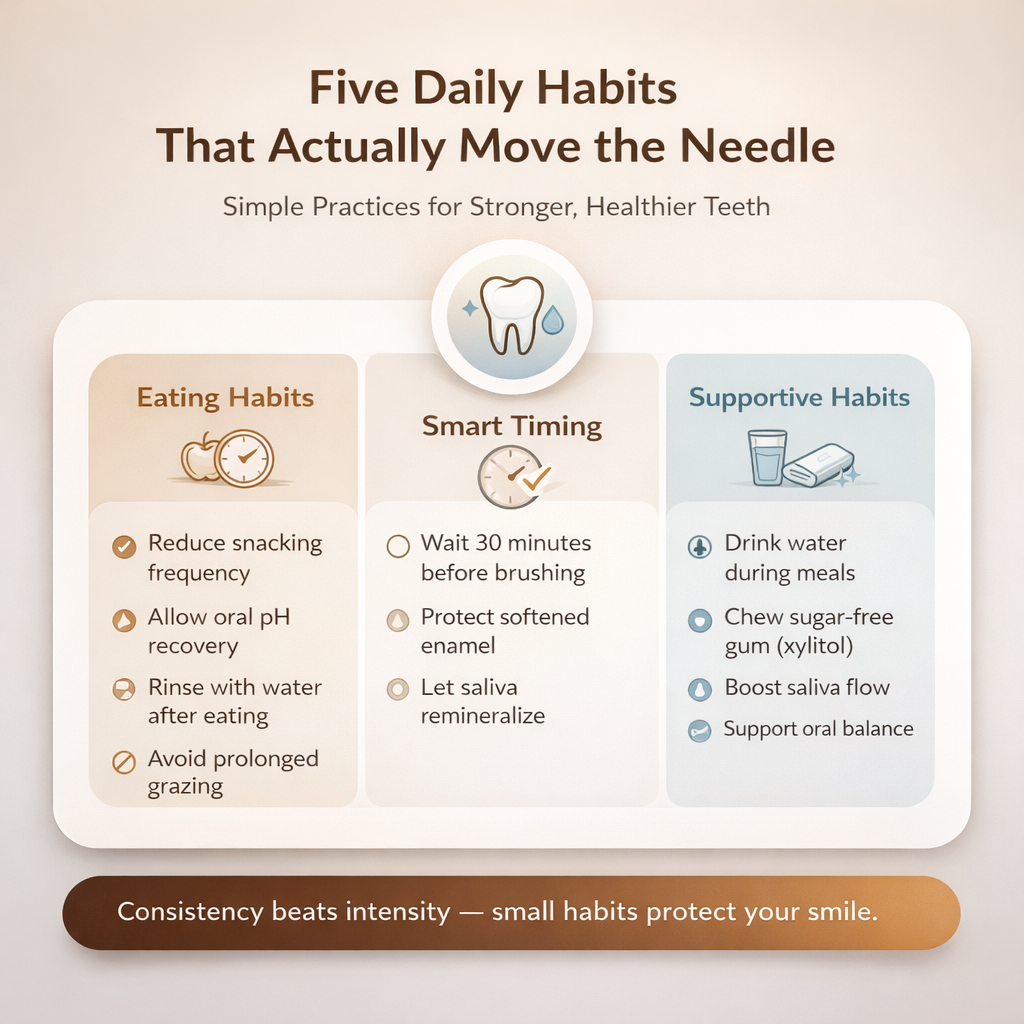
You don’t need a complete lifestyle overhaul. But if you’re serious about supporting your oral health, these five practices are genuinely worth adopting — not because they’re trendy, but because there’s solid biological reasoning behind each of them.
1. Cut Snacking Frequency, Not Just Sugar Content
Every time you eat or drink anything other than water, your oral pH drops and stays low for roughly 20–40 minutes. If you’re snacking every 90 minutes, your mouth never fully recovers between acid exposures. Three meals with no snacks is meaningfully better for enamel than six smaller eating occasions — regardless of what you’re eating.
If you need to snack, finish the snack completely and rinse with water rather than nibbling continuously over 45 minutes.
2. Wait 30 Minutes Before Brushing After Acidic Foods
This is counterintuitive but important. Right after consuming acidic foods or drinks, your enamel is temporarily softened. Brushing at that moment can physically abrade enamel that would otherwise remineralize. Wait 30 minutes. Let your saliva do its remineralization work first, then brush.
3. Drink More Water — Specifically During Meals
Water has a near-neutral pH and helps flush food particles and bacterial acids from around your teeth between meals. It also supports saliva production. The simple habit of drinking water throughout meals — not just between meals — creates a meaningful difference in the acid exposure your enamel faces daily.
4. Chew Sugar-Free Gum (With Xylitol) After Meals When You Can’t Brush
Chewing gum stimulates saliva flow, which buffers oral pH and mechanically clears food debris. When the gum contains xylitol, you get the added antibacterial benefit on top of the salivation stimulus. It’s not a replacement for brushing, but it’s a practical option when you’re not at home.
5. Supplement Strategically — Think Nutrition, Not Just Topicals
Your gums are made of collagen, maintained by fibroblasts, supported by immune cells, and bathed in saliva produced by glands — all of which depend on adequate micronutrition. Vitamin C deficiency measurably worsens gum health (scurvy’s primary symptom is gum deterioration). Vitamin A supports epithelial repair. Polyphenols from plant extracts protect gum tissue from oxidative damage.
The Oral-Systemic Connection: What’s Happening Beyond Your Teeth
If you needed one more reason to take your oral health seriously, consider this: the bacteria that cause gum disease don’t stay in your mouth.
P. gingivalis, the key pathogen in chronic periodontitis, has been found in arterial plaques, the synovial fluid of arthritic joints, and the brain tissue of Alzheimer’s patients. This doesn’t mean gum disease causes heart disease or dementia — causality is complex — but the association is strong enough that major cardiological and neurological research institutions have dedicated significant resources to understanding it.
The proposed mechanism is straightforward: when gum tissue is inflamed and compromised, bacteria get easier access to your bloodstream through the damaged epithelial barrier. Once circulating, they can trigger systemic inflammatory responses that affect distant tissues.
In practical terms, this means oral health isn’t a vanity concern or a dental insurance checkbox. It’s a legitimate contributor to your overall inflammatory burden — and by extension, to chronic disease risk.
The flip side is equally meaningful: improving oral health reduces that inflammatory burden. Multiple studies have found that treating periodontal disease measurably improves blood sugar control in type 2 diabetics, reduces systemic inflammatory markers like CRP, and improves endothelial function (a measure of cardiovascular health).
Tracking Your Oral Health: Knowing What to Watch For
Most people only think about their oral health reactively — when something hurts or a dentist finds a cavity. But there are early signals worth paying attention to consistently:
Gum bleeding during brushing is the most common early sign of gingivitis. Healthy gums don’t bleed from normal brushing pressure. If yours do, it’s not normal, even if it’s been happening for years.
Increased sensitivity to temperature often indicates enamel thinning or gum recession exposing the root surface. Both are progressive if not addressed.
Persistent bad breath despite good hygiene usually means bacterial activity is high — either from gum pockets, a coated tongue, or dry mouth.
Visible changes at the gumline — gums appearing to “pull back” from teeth, or a change in gum color from pink to red or purplish — are signs that tissue is under stress.
Increased plaque accumulation between professional cleanings may mean your oral bacterial balance has shifted and is worth addressing more actively.
If you’re managing your health data through apps or online portals — and many people now track everything from their dental records to supplement schedules digitally — don’t overlook the security side of that. Health information is sensitive. Using a random password generator to create strong, unique credentials for every health-related account you maintain is a simple step that protects your personal data as carefully as you’re protecting your health.
A More Honest Conversation About Dental Care
Here’s what I think the dental industry has gotten wrong: it’s treated oral health almost entirely as a maintenance issue. Come in every six months, get cleaned, get your X-rays, fix whatever’s broken. Rinse and repeat.
That model generates a lot of procedures. It generates a lot of bills. What it doesn’t generate is people with genuinely improving oral health over time.
The more honest conversation is about the conditions inside your mouth — the microbial balance, the nutritional environment, the pH, the gum tissue quality — and whether those conditions are trending better or worse. Surface cleaning is part of that conversation, but only part.
Supporting your oral microbiome through diet, reducing acidic food exposure, staying hydrated, and supplementing with compounds that target the underlying causes — bacterial overgrowth, gum inflammation, enamel vulnerability — produces meaningfully different long-term outcomes than surface hygiene alone.
Final Thoughts
Your mouth is a remarkably complex biological system that’s doing a huge amount of work continuously — protecting you from pathogens, beginning the digestive process, housing a microbial community that affects your systemic health in ways researchers are still fully mapping.
The mainstream approach to oral health — twice-daily brushing, biannual cleanings, fix cavities when they appear — hasn’t meaningfully moved the needle on the prevalence of gum disease or enamel issues in the adult population. That suggests the mainstream approach is missing something.
What it’s missing is this: the mouth responds to what you put in your body, not just what you put on your teeth. Nutrients, plant compounds, microbial balance — these determine the biological conditions that either protect or erode your oral health over time.
Your teeth are supposed to last a lifetime. Treat them like it — from the inside.